
Integrated programmes for resilient communities
Guided by our Strategic Plan 2025–2029: climate action and food security, livelihoods and youth employment, health and education — alongside our long-standing protection and WASH work.
Climate Action & Food Security
As a key stakeholder in climate action, Top Notch-CDI is officially accredited by the United Nations Convention to Combat Desertification (UNCCD). We promote green jobs, afforestation and wetland protection, and we mainstream climate action across all our work.
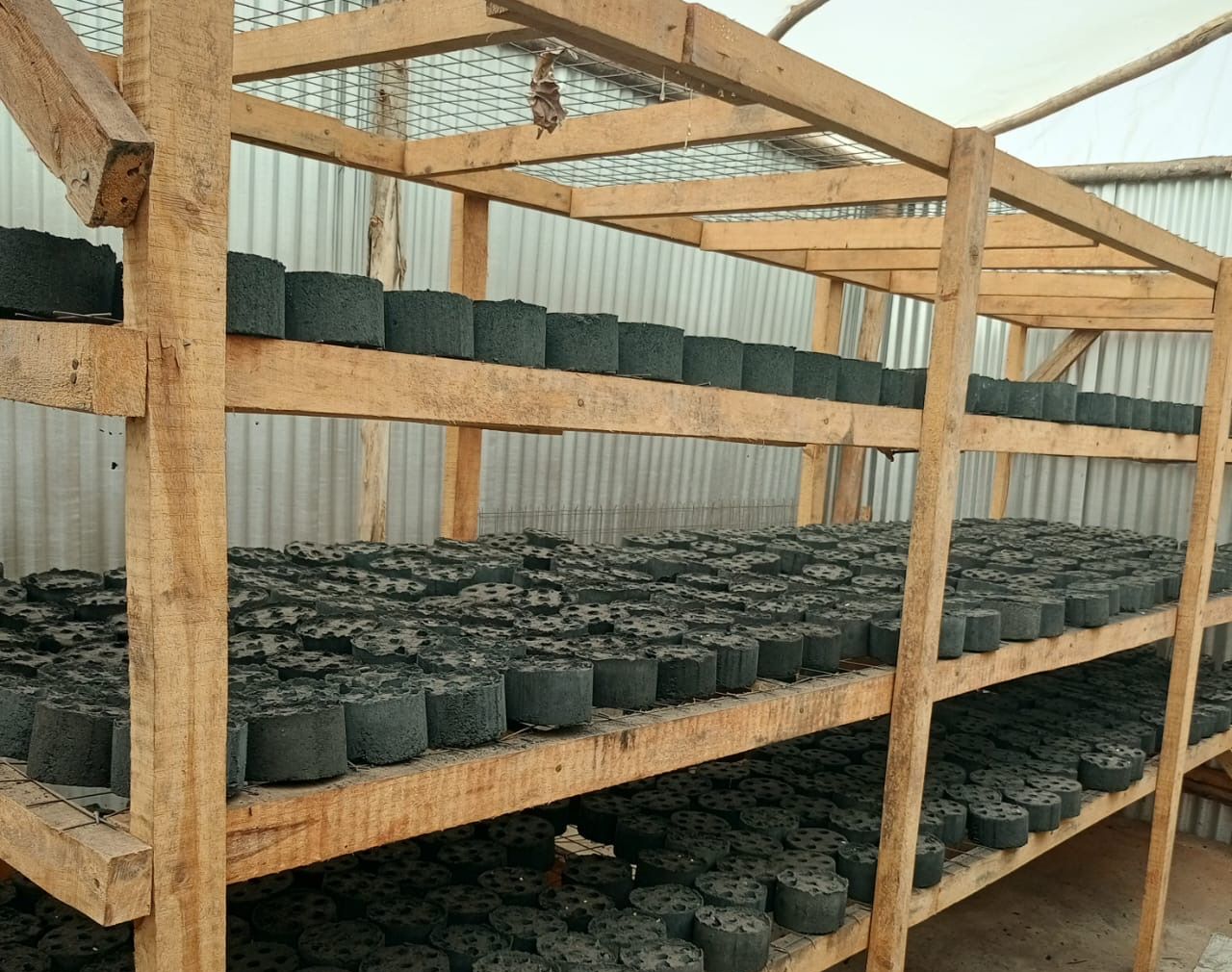
- In Yumbe (West Nile) we promote solar energy and briquettes — building skills, changing mindsets and supplying local energy-saving products. 100 households have been reached with 300 briquettes.
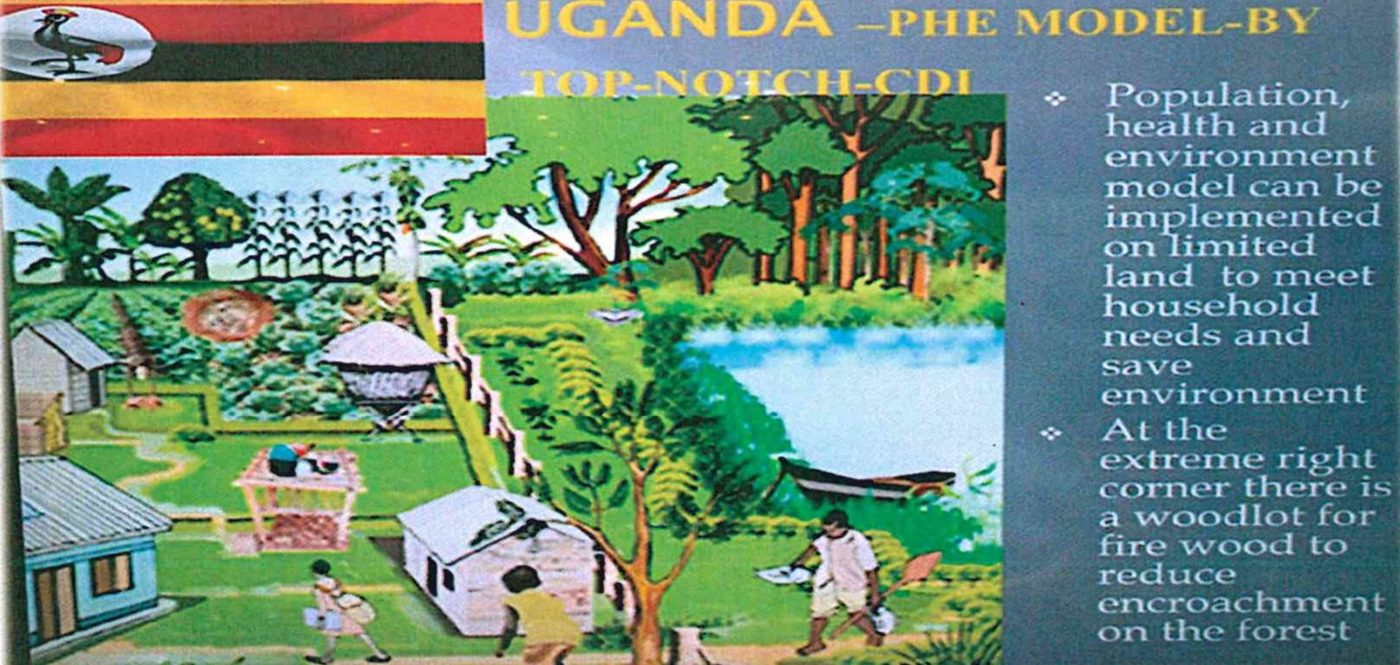
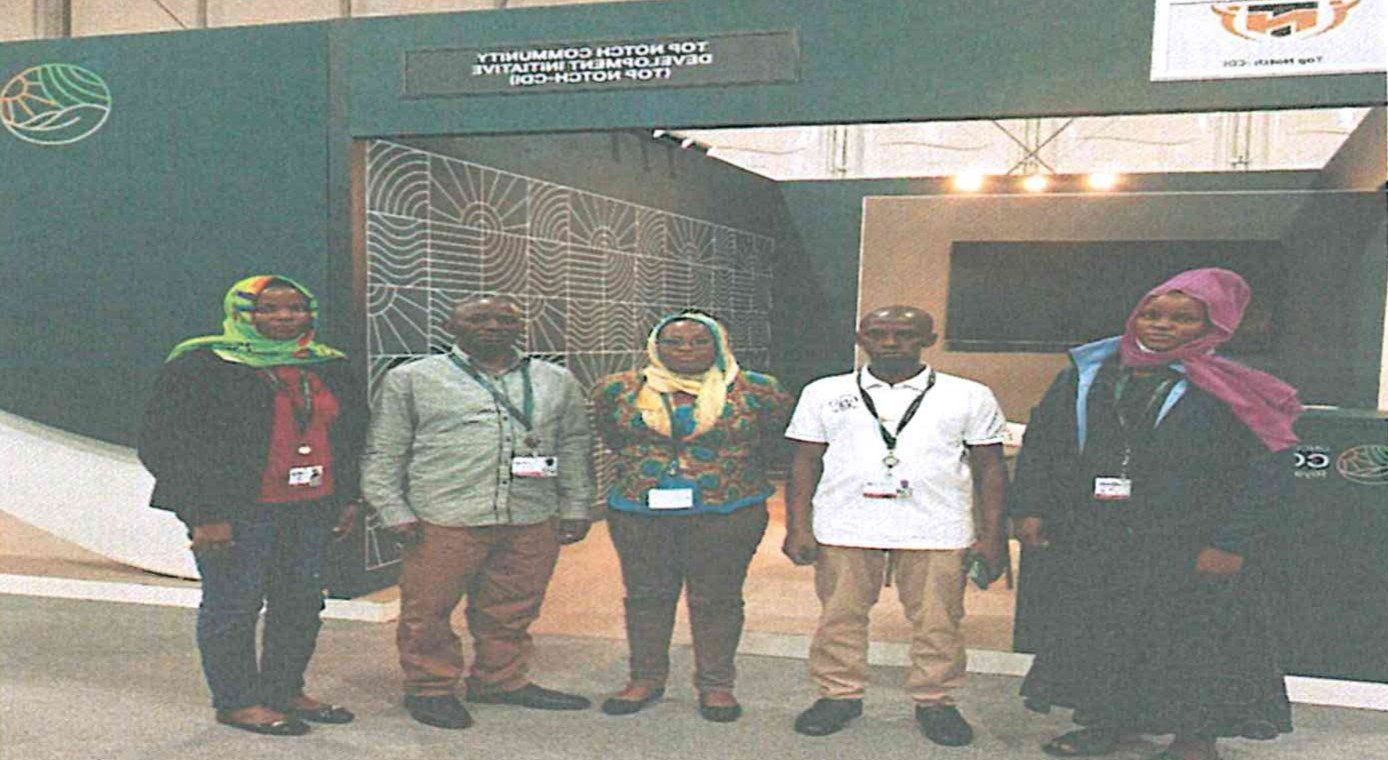
- In December 2024, five staff represented us at UNCCD COP16 in Riyadh, presenting our Population, Health & Environment (PHE) model. Over 80 international delegates visited our stall.
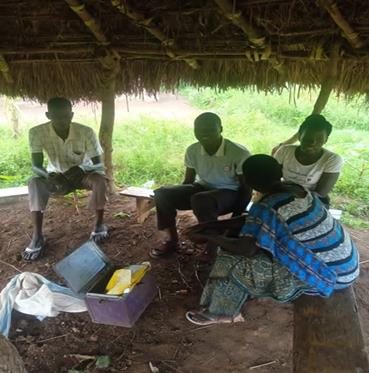
- With youth, community leaders, schools and CSOs we promote tree planting, soil health and clean energy. Communities in Kigolobya village, Hoima, now own woodlots and save together for solar panels.
- We have begun the process of joining PELUM Uganda, a network improving the livelihoods of small-scale farmers through sustainable agriculture.
Our PHE model
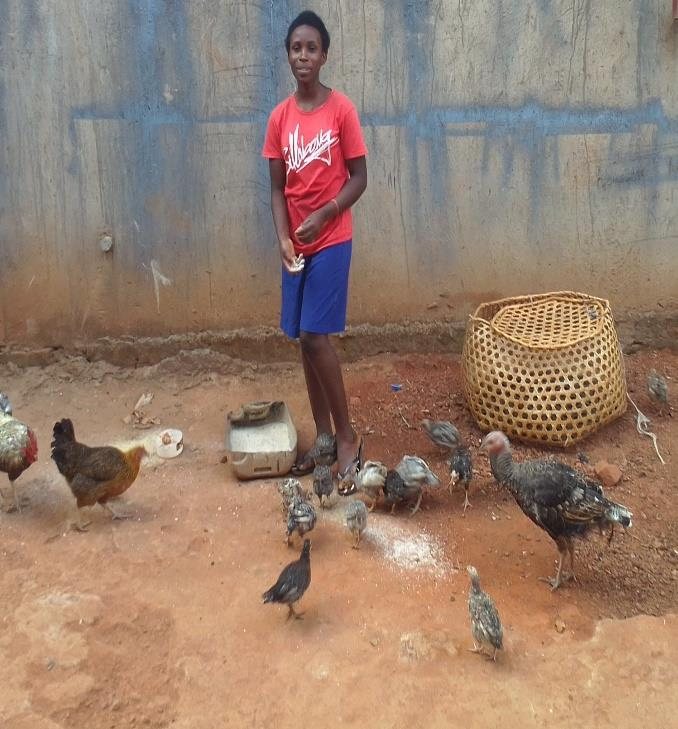
The model shows how a household on limited land can meet its needs and protect the environment — preventing degradation, restoring degraded land and building resilience, with a woodlot for firewood to reduce encroachment on forests.
Key strategies
- Education and participation in alternative energy: briquettes, energy-saving stoves and biogas
- Advocacy for policies that conserve the environment and check climate change
- Engaging communities and local/cultural leaders on their roles
- Smart agriculture: agro-forestry, food trees and irrigation
- Family planning to reduce strain on resources
- Model family household approaches
- Recycling reusable materials and converting non-biodegradable materials
- Information, education and communication materials on conservation and public health
- Community engagement meetings on HIV, TB, malaria, SRHR, mental health and climate change
- Partnerships with communities, cultural leaders and local government for outreaches
- Planting indigenous trees such as Mvule and Musizi, and fruit trees that protect the environment
- Reducing firewood use through energy-saving stoves
- Putting young people at the centre of protecting the environment
- Greening schools, churches and organisations
- Promoting drought-resilient crops such as maize and sorghum for food security
Livelihoods & Youth Employment
We are a reliable partner for high-quality, standardised VSLA programmes — creating green jobs and building digital, business and financial literacy that strengthens resilience, promotes financial inclusion and supports sustainable livelihoods.
- With the Children Rights and Violence Prevention Fund (CRVPF) we are supporting the training of 200 community organisations, in a programme reaching 400,000 young people and enabling 250,000 transitions into dignified work, including green jobs, across West Nile, Northern, Western and Central Uganda.
- We deliver VSLA Training of Trainers for other organisations to strengthen their VSLA programming and its sustainability.
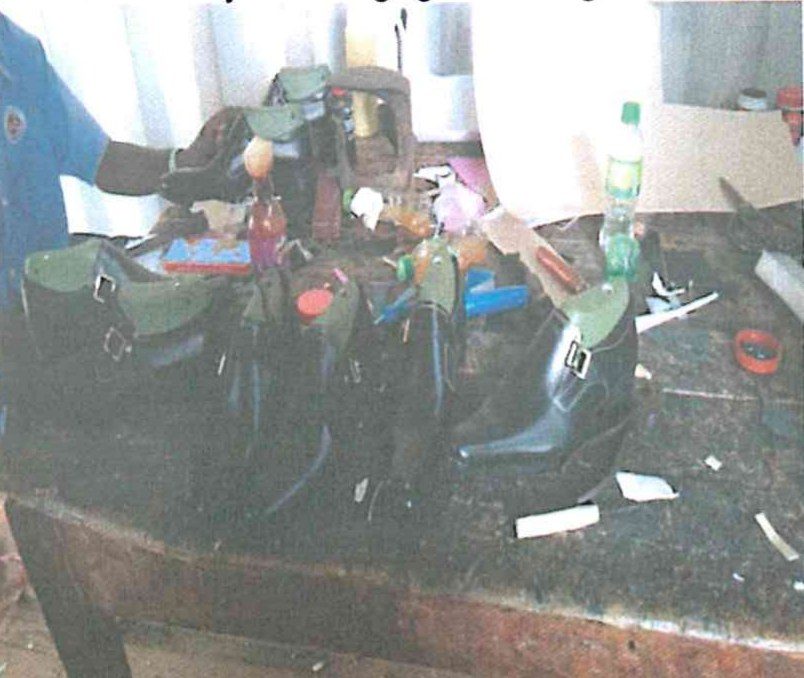
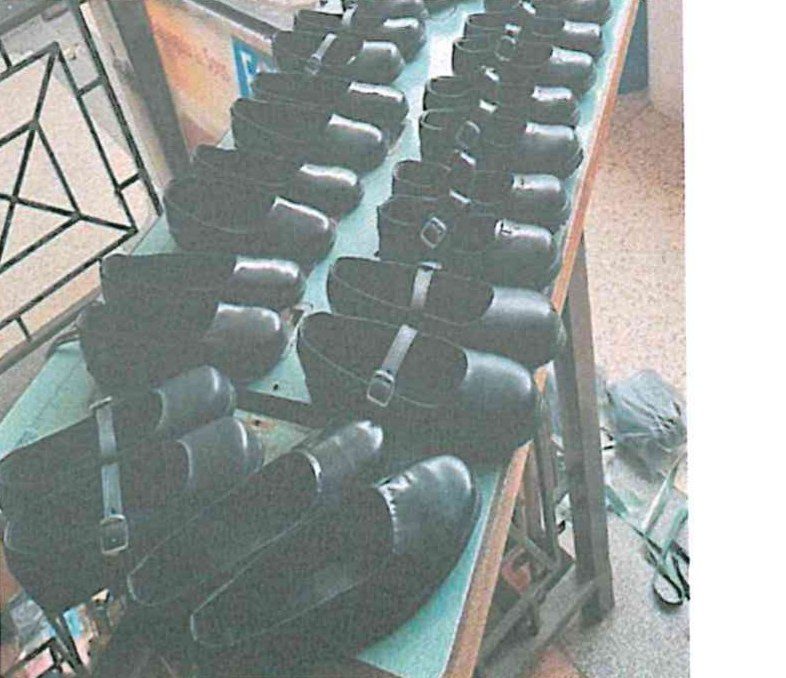
- In 2024 we set up a full youth skills department — beads and shoemaking, petroleum jelly, liquid and bar soap making, tailoring and mushroom growing. 61 young people benefited.
Our standard VSLA training package
Key strategies
- Career guidance that steers youth towards practical training and skilling — making them job creators, not seekers
- Private sector engagement for job placements and opportunities such as crafts making
- Integrating social and emotional skills into skills development
- Training on income generating activities and Youth Savings and Loans Associations (YOSVLAs)
- Linkages with existing government and partner programmes
- Engaging youth in agriculture with a focus on value addition
Health & HIV Prevention
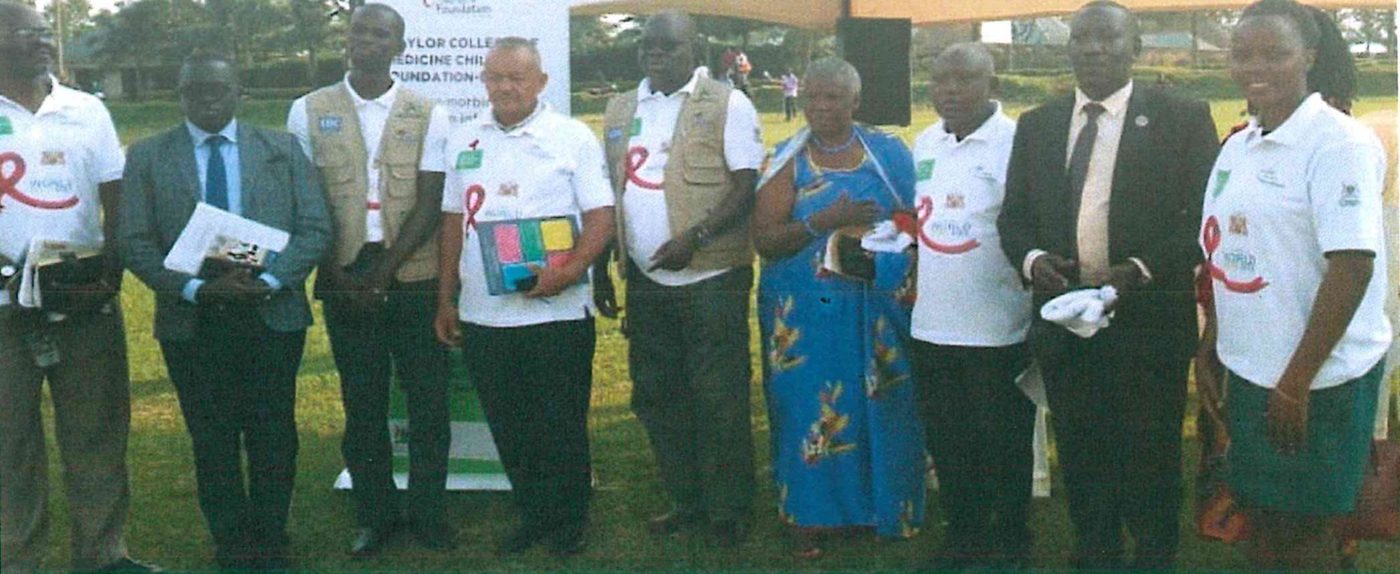
Since 2023, in partnership with Community Health Alliance Uganda (CHAU) and with financial support from the Elizabeth Glaser Pediatric AIDS Foundation through Africa Reach, we have delivered HIV prevention projects at national and district level.
- We improve access to new HIV prevention options — including lenacapavir, cabotegravir and the dapivirine ring — reaching over 250 young people, especially young women, in Kyenjojo District.
- Through the “Reaching the Last Child” project we worked to reduce new paediatric HIV infections and increase uptake of prevention, care and treatment among infants, children, adolescent girls and young women and their families.
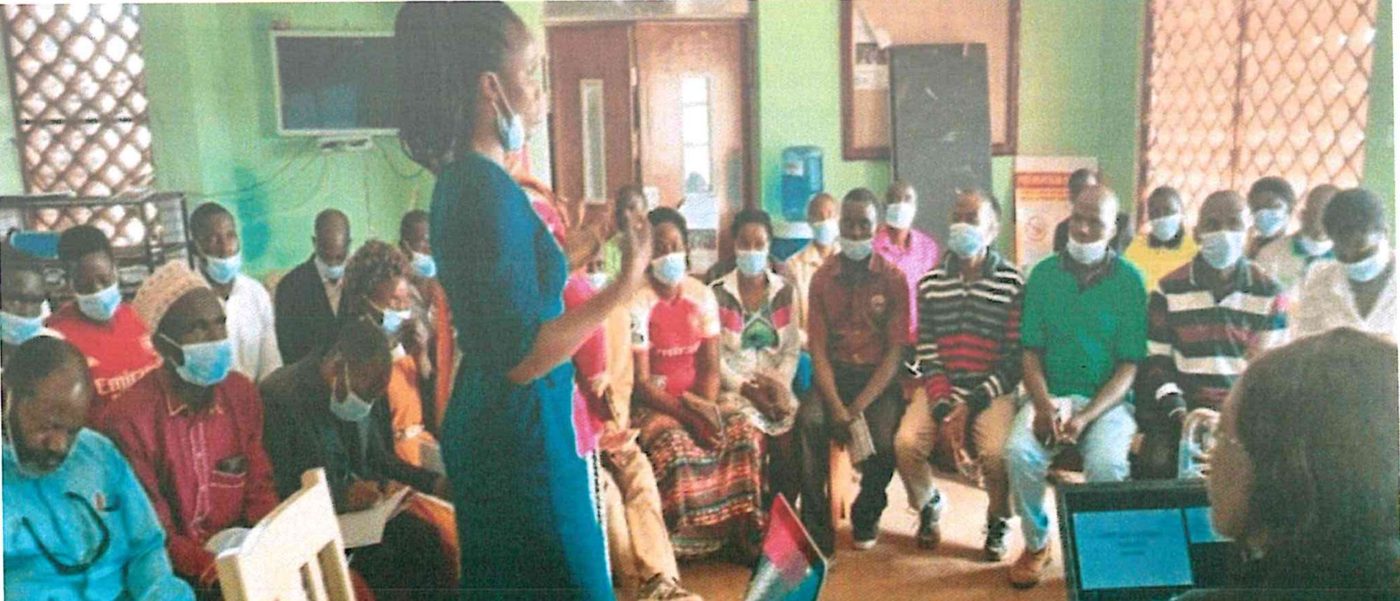
- We trained 40 community champions from Mbale, Kigoyera and Kyarusozi sub-counties on eliminating mother-to-child transmission (eMTCT); they now link young women to health facilities and lead advocacy.
- On 25 June 2024 we convened a national dialogue on the Universal Test and Treat policy with the Ministries of Health, Education and Gender, health workers, CSOs and people living with HIV.
Key strategies
- Identifying undiagnosed infants and children exposed to or living with HIV
- Increasing demand for HIV prevention among adolescent girls and young women, including during pregnancy and breastfeeding
- Increasing enrolment in treatment for women, mothers, infants and their families
- Targeted advocacy on barriers such as drug stock-outs, limited testing points and too few counsellors
- Integrating information on TB, malaria, hepatitis B and NCDs into community systems strengthening
- Linking HIV prevention with economic empowerment and nutrition for young people and women
Education
We engage and sensitise communities so every child — especially vulnerable children — can learn, stay in school and thrive.
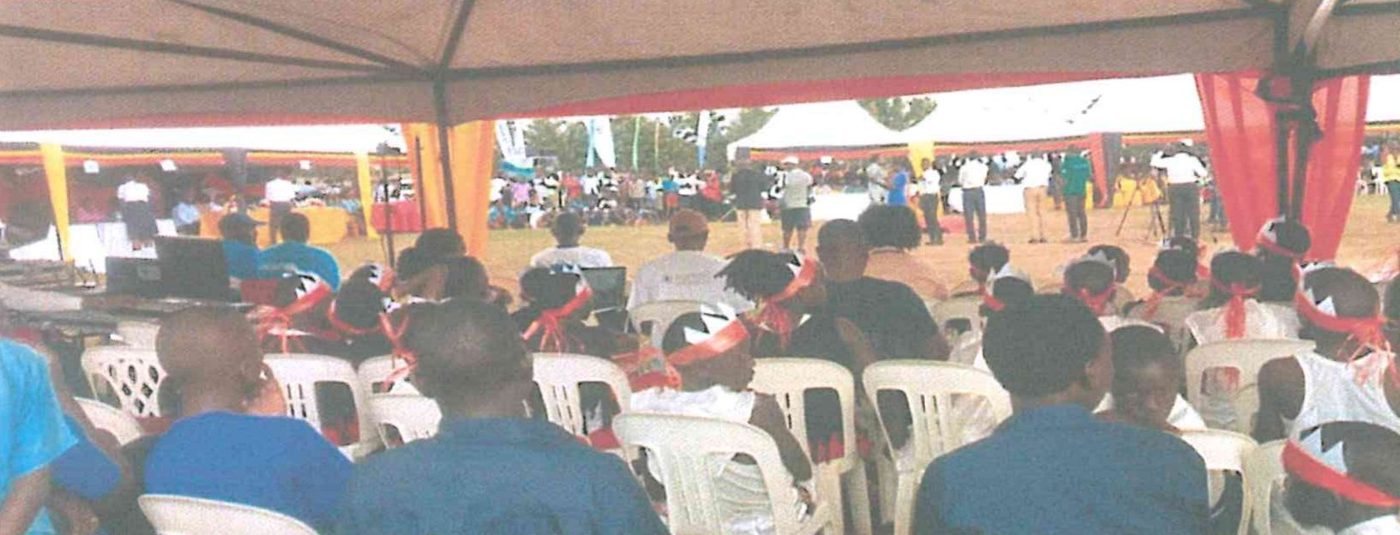
- In 2024 the Ministry of Education and Sports invited us to serve on the national organising committee for the Day of the African Child in Kiryandongo (15–16 June), under the theme “Education for all children in Africa: the time is now”.
Key strategies
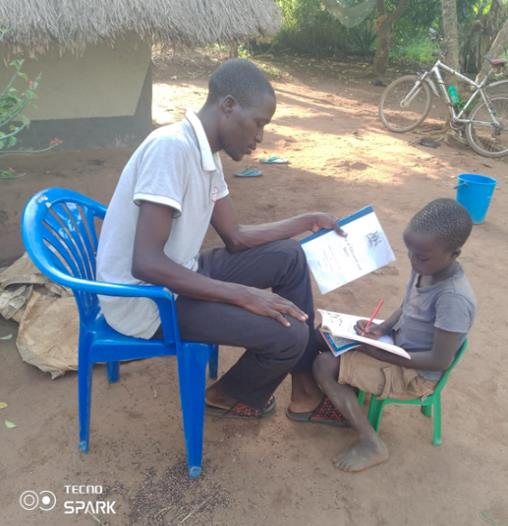
- Home-first literacy: parents and caregivers as first educators in early reading and numeracy
- The Sinovuyo Caring Families Programme for Parents and Teens — evidence-informed parenting
- Learning induction: strengthening early childhood development centres with scholastic materials
- Sensitisation of parents, teachers, community-based volunteers and local leaders
- Skilling beneficiary households in income generating activities for meals, fees and scholastic materials
- Awarding best-performing supported pupils to boost morale and performance
- Drama groups that promote education and campaign against child labour and sexual harassment
- Fostering teacher–parent relationships
- Community awareness on children's rights and wellbeing
Child Safeguarding
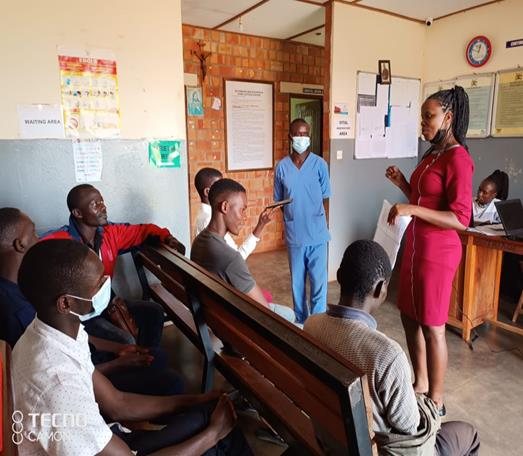
Every child deserves to grow up safe. We work with families, leaders and child protection structures to prevent and respond to abuse.
Key strategies
- Community awareness sessions on the rights and wellbeing of children
- Empowering community child protection units with the mandate and tools they need
- Advocating for peaceful, safe communities where children live with comfort and sound mind
- Supporting local by-laws and ordinances in line with children's rights
- Following up cases to ensure laws are enforced and offenders held accountable
- Parental guidance for better understanding between caregivers and children
- Community whistle-blowers who alert on child rights violations
Prevention of Sexual Harassment, Exploitation & Abuse
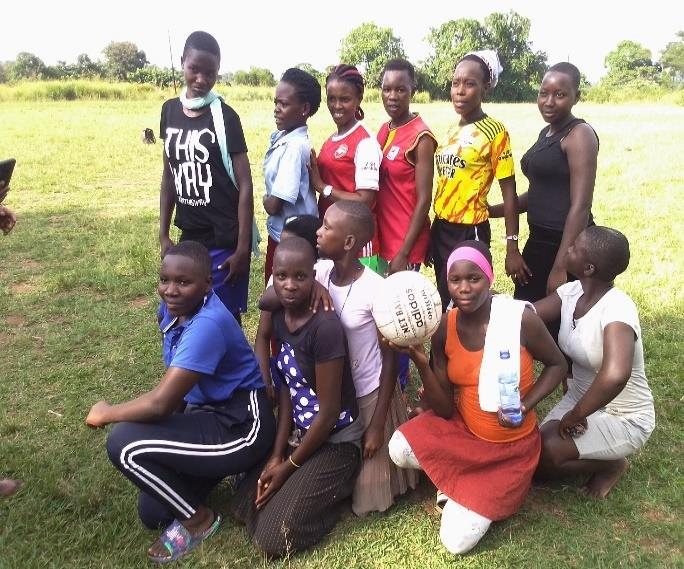
We prevent and respond to sexual harassment, exploitation and abuse through awareness, survivor-centred support and accountability — and by building young people's economic independence.
Key strategies
- Using art and craft to promote human rights, including prevention of SHEA
- Supporting national and international coordination on SEA and SH prevention and response
- Strengthening local and community leaders on PSHEA
- Developing survivor- and victim-centred response and support mechanisms
- Trainings and awareness campaigns on SEA prevention
- Advocacy and campaigns on SHEA
- Training SHEA champions to report cases and safeguard communities
- Positive parenting skills training for guardians and caregivers
- Monitoring, evaluation and reporting on SEA and SH prevention and response
- A gender-responsive M&E framework for the prevention of sexual harassment
- Establishing telephone hotlines
- Empowering adolescent girls, boys and young mothers as change agents
Water, Sanitation & Hygiene
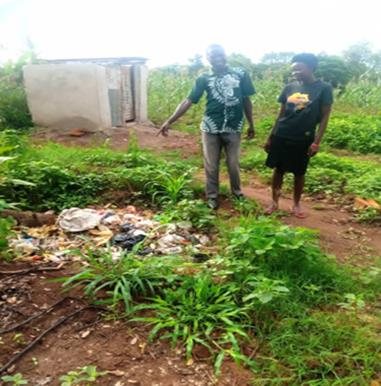
We help communities take ownership of safe water, sanitation and hygiene — protecting families from preventable disease.
Key strategies
- Community engagement for ownership of WASH: water committees, maintenance rotas for community water points and tippy taps for home hygiene
- Awareness sessions on safe water, good sanitation and hygiene
- Advocacy meetings with stakeholders for policies that enhance WASH interventions
- Top Pads — Top Notch's menstrual hygiene innovation for adolescent girls and young women
- Training in skills that promote WASH and provide alternative income, such as soap and smearing-oil making
- Collaboration with government, local council leaders and VHTs to follow up on hygiene, safe water, latrines, utensil racks and rubbish pits
- Greater engagement with partners in urban areas so that children are reached
- Behaviour change communication in communities, schools, health facilities and churches
- Capacity building of local leaders and institutions for clean toilets and good sanitation
- Empowering communities to embrace better WASH services
Walk the journey with us
Partner with us, volunteer your skills or support our work so that more vulnerable families in Uganda enjoy impactful, sustainable services.